

Yesterday, we once again welcomed Jane Pollinger from the National Education Nature Park. Some of our Eco Councillors, along with pupils who have a real passion for science and the environment, headed outside to continue exploring different areas of our school grounds. They collected important information to help us build a picture of the habitats we have around us.
🌱 What did we get up to this time?
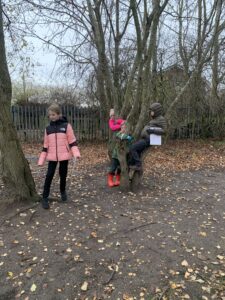
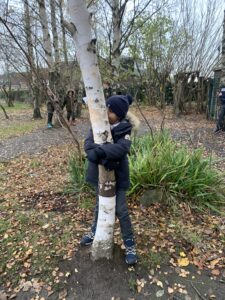
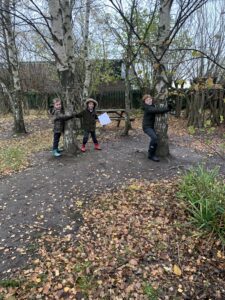
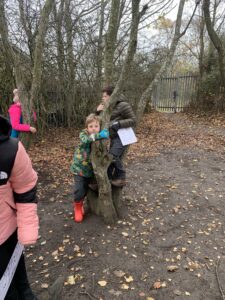
The children selected two new areas of our school grounds to explore, carrying out a woodland survey in both the Curly Wurly and the wooded area near the pond. We investigated what type of woodland each area could be classified as by looking at whether it contained more evergreen or broadleaf trees. These activities encouraged the children to think like real scientists by observing their surroundings, asking questions and gathering data about our environment.
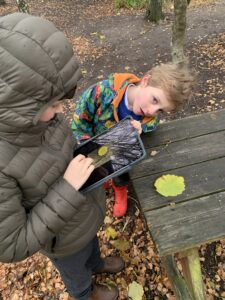
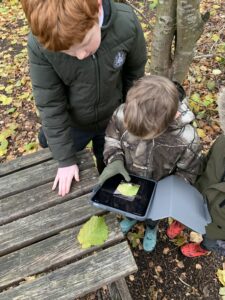
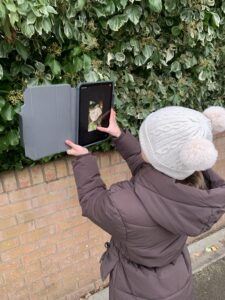
Working in pairs, the children then used the iNaturalist app to photograph some of the leaves and living plants we could find near the KS2 yard. They particularly enjoyed using the app to help identify the exact species of trees and plants growing around our school.
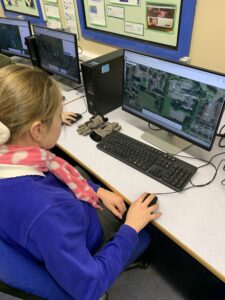
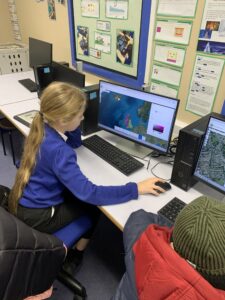
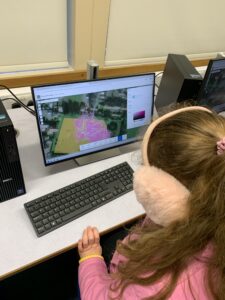
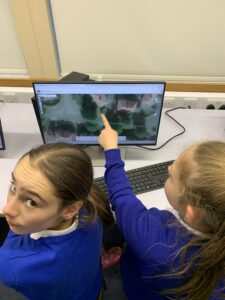
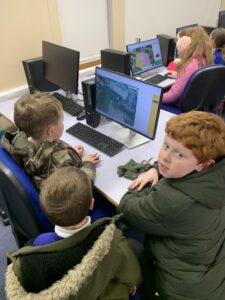
We then headed back inside to explore the digital map of our school grounds on the National Education Nature Park website. Taking turns, the children added the habitats they had explored to our digital map, identifying and naming the specific types of habitats we have discovered so far.
We will continue to build on this throughout the year, adding different types of surfaces and boundaries, as well as the animals and other living things we find and photograph using iNaturalist.
🌍 What happens next?
Jane will return in the spring, when more plants and living things will be beginning to grow and emerge. This will give the children another opportunity to continue their habitat mapping and upload their findings to Windy Nook’s digital map on the National Education Nature Park website.
This work will help us develop a much better understanding of our school grounds and identify opportunities to make them even better for nature and wildlife in the future. Opportunities like this allow our pupils to become active scientists and environmentalists, developing the knowledge and skills to make a real difference to their own school community.
A huge thank you to Jane for helping us get started. We can’t wait to see what else we discover! 🌿
- Article 12 – Respect for Children’s Views: Children are encouraged to share their ideas, ask questions and take an active role in decisions about improving their school environment.
- Article 28 – Right to Education: Through practical, hands-on experiences, children develop their knowledge and understanding of science, nature and the world around them.