
We have had a super week being scientists and thinking about how to look after our planet this week. We examined our mini wormeries daily using magnifying glasses to see if the worms had made any tunnels or ate any food. On Friday when we looked at our wormeries for the final time we concluded that the worms had mixed up the layers of sand and soil as they dug tunnels which helped us understand the important job worms do in soil. We tipped our wormeries into our compost bin so that the worms could continue to thrive and help turn the compostable materials into compost.
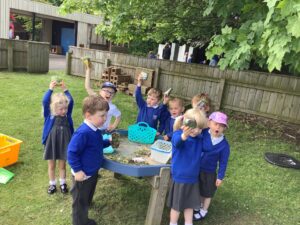
We have talked about what we already do in nursery to re-use, recycle and how to be resourceful. As you know, we are already expert composters in nursery. This week we extracted some cardboard, in the form of rolls and egg boxes from our junk model box so that we could add it to our compost bin to help with the consistency. We practised our cutting skills as we cut up the cardboard and also teared it to help strengthen our hands. We weeded one of planting boxes so that we could plant some wild flower seeds which the school was given as part of the King’s coronation celebration. We talked about how this would hopefully encourage wildlife and teach us how they grow as well as how to care for them. We have been mindful this week about saving electricity and turned lights off when we went outdoors or if we felt that it was bright enough in our classroom without lights on. On Thursday we reused some plastic bottles to make a rotbot. We collected some grass cuttings, brown and green leaves, compostable food from our school kitchen and the cardboard that we have been cutting and tearing all week and put it in our bottles. We are going to keep the bottles for six weeks by which time we hope they will have decomposed into compost. We are hoping to plant seeds in our rotbots. We reused the end the water from our water trays at the end of the day to water our plants.
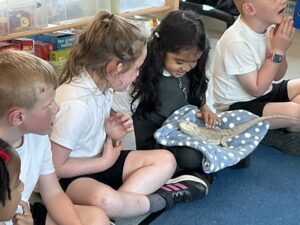
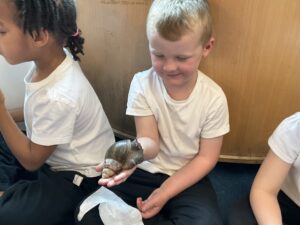
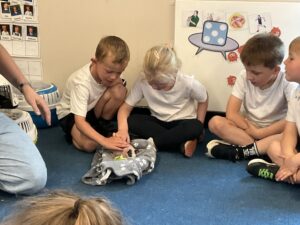
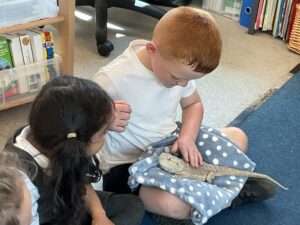
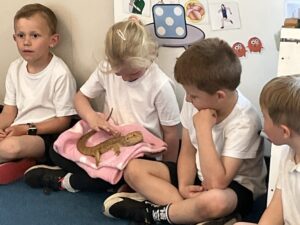
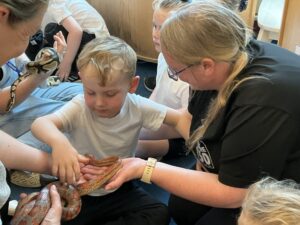
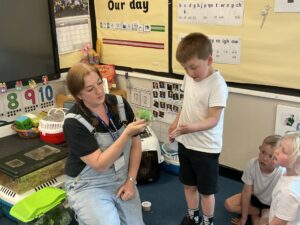
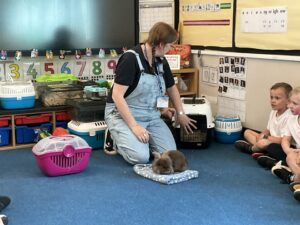
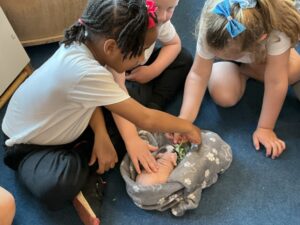
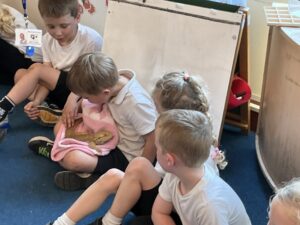
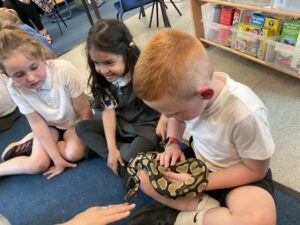
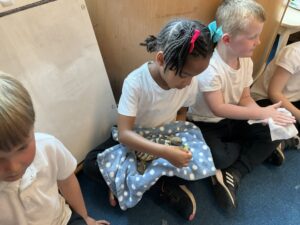
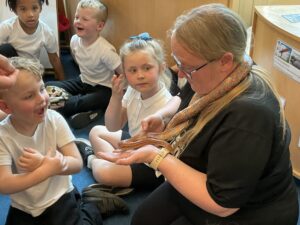
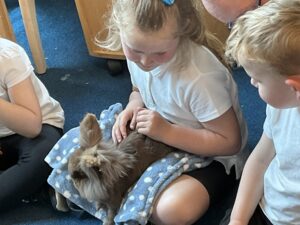
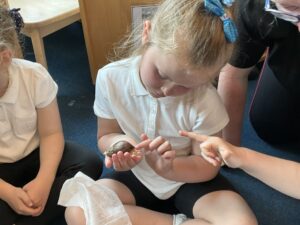
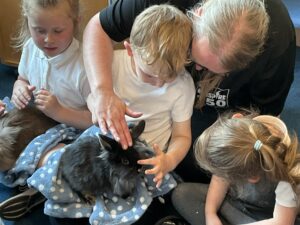
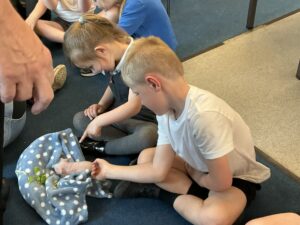
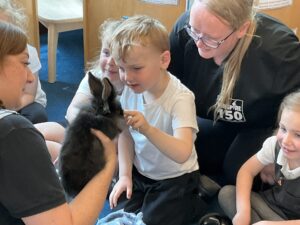
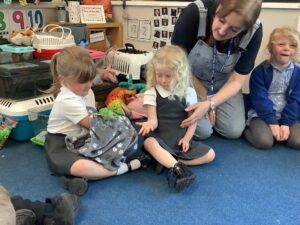
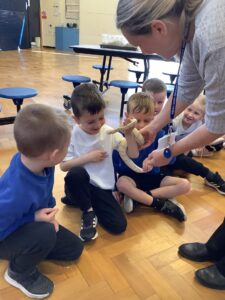
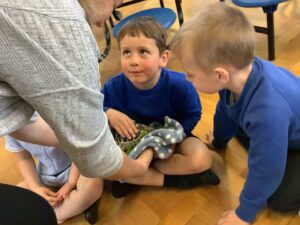
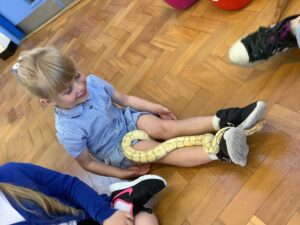
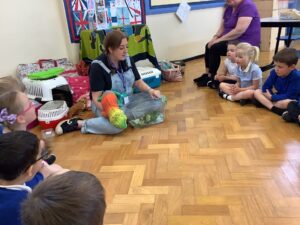
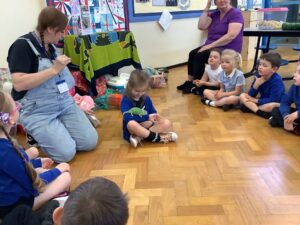
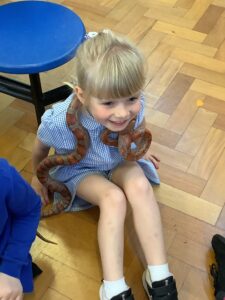
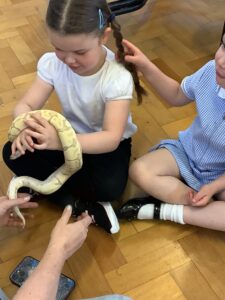
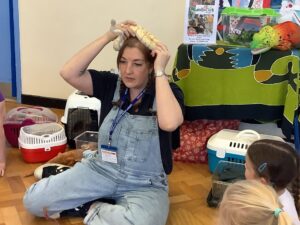
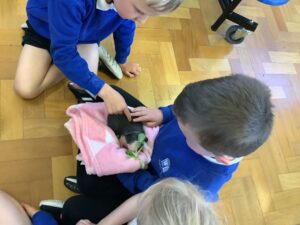
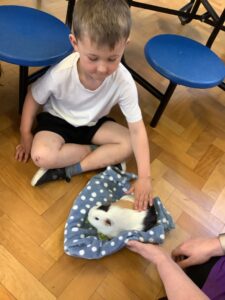
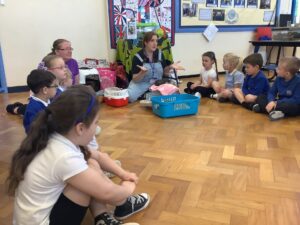
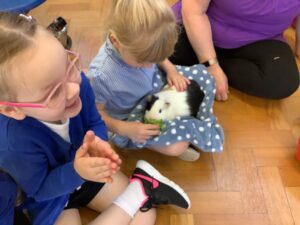
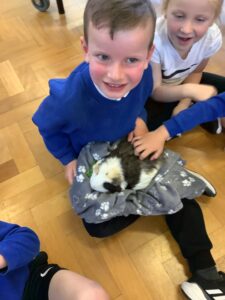
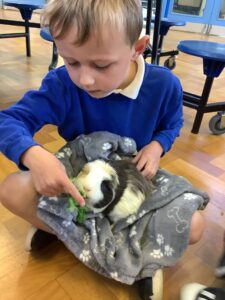
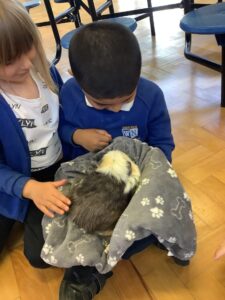
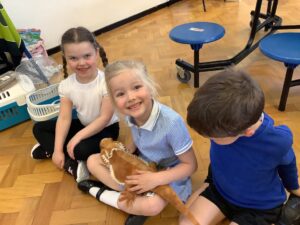
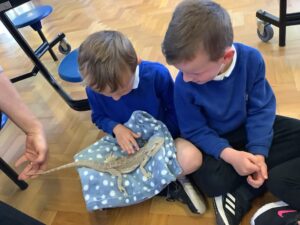
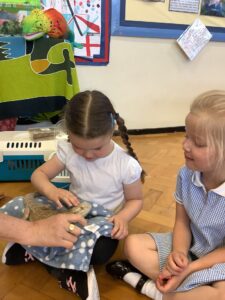
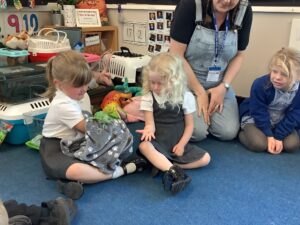
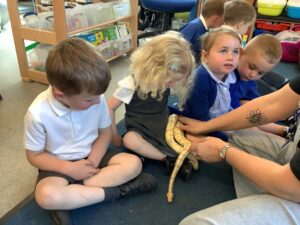
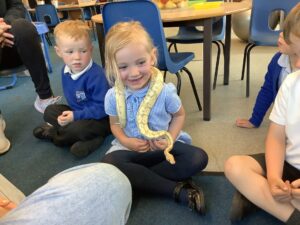
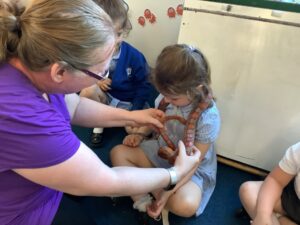
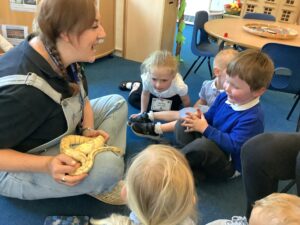
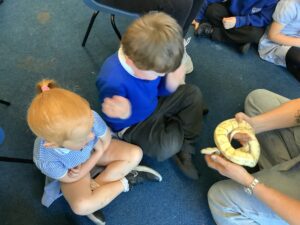
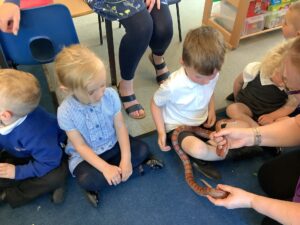
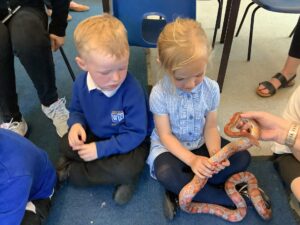
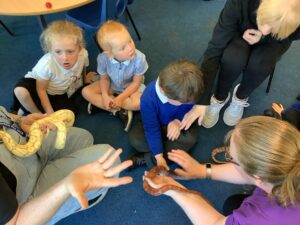
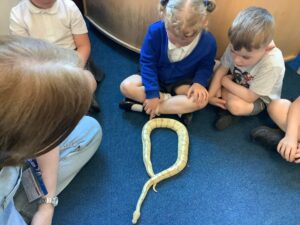
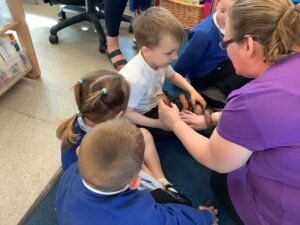
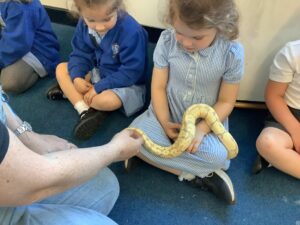
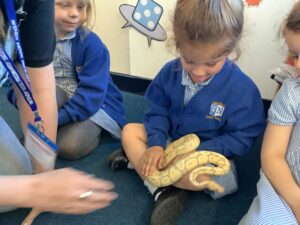
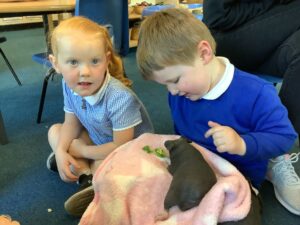
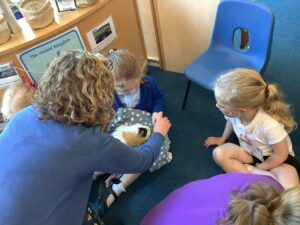
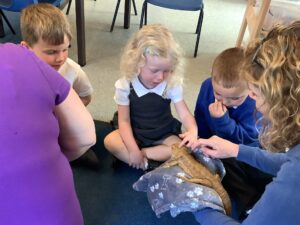
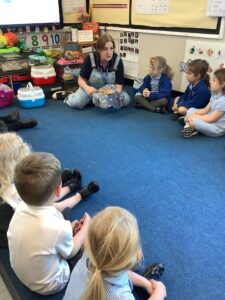
On Friday, both of our reception classes and our nursery class had a fantastic time when a lady called Angela brought some animals into school for us to look at, touch and hold. She brought guinea pigs, Lionhead rabbits, a Royal Python snake, a Corn snake, Bearded dragons, tortoises, Giant snails and a chameleon. Angela told us that it is very important to look after our planet so that amazing animals like the ones that we met today can stay healthy.
Article 1: Everyone, under 18, has the rights of the UN Convention.
Article 2: All children have rights. No child should be treated unfairly.
Article 23: You have the right to special education and care if you have a disability, as well as all the rights in this Convention, so that you can live a full life.
Article 24: You have the right to the best health care possible, safe water to drink, nutritious food, a clean and safe environment, and information to help you stay well.
Article 28: You have the right to a good quality education. You should be encouraged to go to school to the highest level you can.
Article 29: Your education should help you use and develop your talents and abilities. It should also help you learn to live peacefully, protect the environment and respect other people.